Category: Politics

On 25 February 2021, the Federal Senate passed the Treasury Laws Amendment (News Media and Digital Platforms Media Bargaining Code) Bill 2021, (“the Code”), a controversial new law requiring certain digital platforms to pay a negotiated fee to eligible Australian news media businesses for the use of their digital content. Whilst many have praised the Code for standing up to omnipotent tech companies in the noble pursuit of fair market practices, others, including the tech companies themselves, have accused Australia of trying to break the internet.
Don’t you sometimes miss the good, old-fashioned Moral High Ground? As a post-war baby, the world I was born into seemed a brave and righteous one. Our fathers had just fought and died to free us all from fascism and oppression. The world had paid a terrible price, but it was all worth it.  In the end we won, and the Bad Guys lost.
In February 1692, in a secluded village in the isolated British American colony of Massachusetts, 9-year-old Betty Parris and her 11-year-old cousin Abigail Williams, began to behave very strangely indeed. It seems they had recently taken to screaming, ranting and raving, throwing objects hither and thither, making weird noises, and generally behaving in a way the local reverend described as “beyond the power of epileptic fits or natural disease to effect.” When other young females in the same village started to exhibit similarly disturbing symptoms, the good folk of Salem quickly concluded there was witchcraft at work in their town, and decided it was time to take action.
A generation ago, corporal punishment at school was commonplace. Canings and strappings that would now turn school mums like me apoplectic were once considered a routine and acceptable means of enforcing discipline and taming the unruly child.
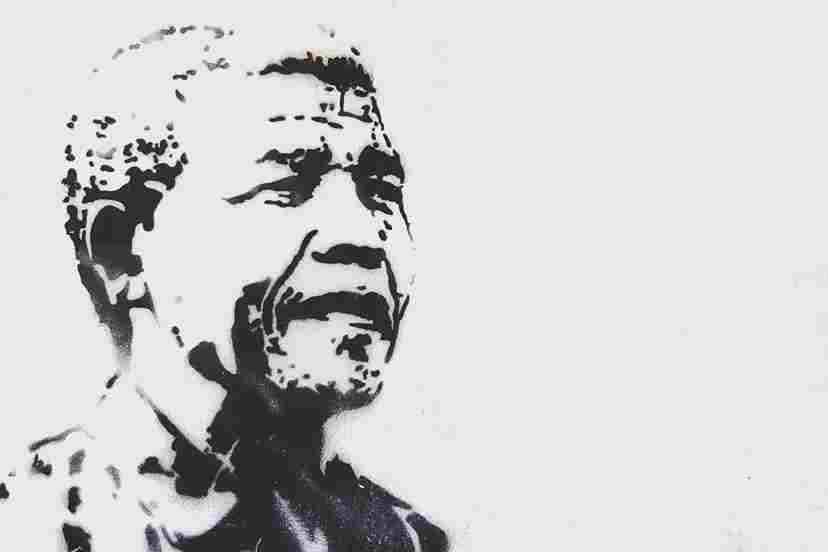
The late great Nelson Mandela served 27 years in prison for his opposition to the apartheid system of racial segregation in South Africa. When he was finally released from custody in 1990, he famously said "To deny a person their human rights is to challenge their very humanity."
Without doubt, self-preservation is the most powerful and compelling of all human instincts. The will to survive - physically, emotionally, financially – is acute and compelling, inextricably ingrained in our human condition.
When I first started doing trial work as a young lawyer I was constantly surprised and intrigued by the persistent inconsistency between different eyewitness accounts of the exact same incident. Particularly when dealing with a violent or otherwise shocking event, such as a car crash or a brutal street brawl, no two witnesses seemed to remember the same event in the same way. For a defence lawyer it was the welcome stuff of reasonable doubt, but I soon learned it was also just a fact of life. When people are confronted by emergent and traumatic circumstances, their brains can only take in so much detail, and the fact two witnesses remember one event in completely different ways doesn't necessarily mean either one is telling fibs. Quite the contrary.
“I am the result of a loving upbringing in a peaceful country, with wonderful parents and siblings, a very long-term relationship, stability, support – but a feeling that life isn't always just and that there is injustice for people and we should do something about it.”
In a time of increasingly vigorous criticism of some of our court processes, many were taken aback when Victoria’s Supreme Court recently hit back at its detractors, carpeting three politicians, a journalist and a newspaper editor, over public statements criticising the sentencing of terror offenders. A couple of months ago three ministers of the Turnbull government, – Greg Hunt, Alan Tudge and Michael Sukkar – publicly slammed Victorian judges for what they characterised as inappropriate leniency and “ideological experiments” in sentencing terrorists, Mr Sukkar asserting the judges’ approach “has eroded any trust that remained in our legal system.”
On June 28, 1963, the then-President of the United States of America, the late great John Fitzgerald Kennedy, addressed a joint session of the Oireachtas Eireann, the national parliament of Ireland, in Dublin. He spoke not only as the world’s most powerful political leader of his era, but as the proud descendant of an impoverished Irish emigrant family.
“Cannabis sativa is the greatest wonder-drug ever known to man.” The grizzled, weather-beaten face of the aging hippie who sat across the narrow interview desk from me, in the close, stifling confines of the remand prison interview room, was stretched into a wide-eyed look of wonderment. “The Hindu Vedas sang about its powers in the Atharva Veda 1500 years before the birth of Christ. The Hindus called it ‘the food of the gods.’” I took a reassuring glance in the direction of the panic button on the wall. It was comfortably within my reach.
For many the recent retrospective by Brisbane’s Courier Mail newspaper, celebrating the 30 year anniversary of the game-changing Fitzgerald Commission of Inquiry into Police Corruption in Queensland, will have brought back memories of more robust times. Between 1987 and 1989 the inquiry, presided over by Tony Fitzgerald, then a razor-sharp and highly regarded Brisbane barrister, systematically uncovered and dismantled an entrenched culture of police corruption that led all the way to the top.